
March 2, 2026
War in the Middle East

Good morning, everyone!
Today, we will look at the outbreak of conflict in the Middle East over the weekend and the long history that led up to it.
Let’s get to it.

The Week Ahead
-President Donald Trump will host Brazilian President Luiz Inácio Lula da Silva at the White House this week.
-The first primaries of the U.S. midterms will be held on Tuesday, with elections across Texas, North Carolina, and Arkansas.
U.S. Homeland Security Secretary Kristi Noem will testify before the Senate Judiciary Committee.
-China’s top political advisory body will convene in Beijing for their annual meeting on Wednesday.
Nepal will hold legislative elections.
Trump will host German Chancellor Friedrich Merz at the White House.
-Trump will host leaders from Latin America and the Caribbean at the Trump National Doral Miami on Friday.
-Colombia will hold legislative elections on Sunday.
Switzerland will hold a referendum vote on whether to cap its population at 10 million.
Major Developments
-Joint U.S. and Israeli airstrikes on Iran killed Iranian Supreme Leader Ayatollah Ali Khamenei over the weekend, capping months of building tensions between Washington and Tehran.
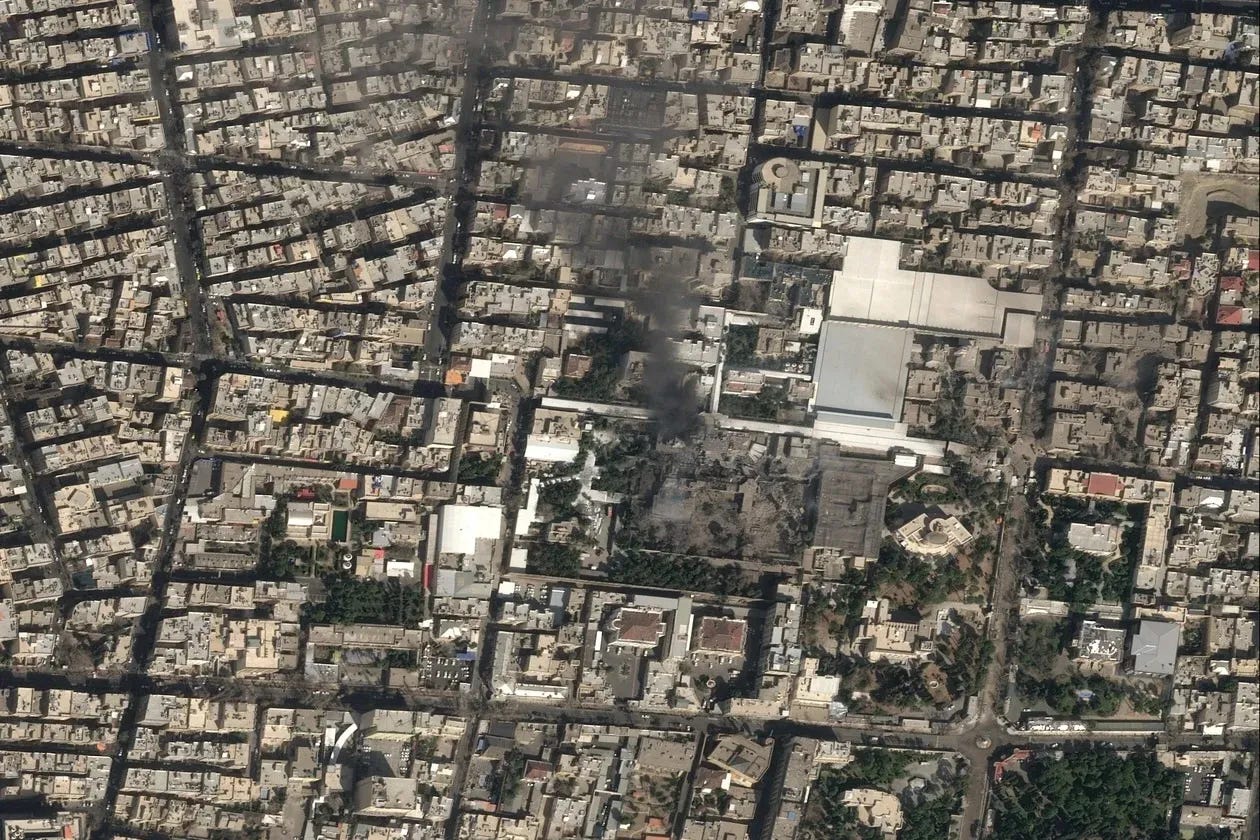
The large-scale military offense, codenamed “Epic Fury,” commenced early Saturday morning, with President Donald Trump saying in a video published to his social media that he ordered the operation due to Tehran’s refusal to agree to limit its nuclear program.
In the remarks, Trump called on the Iranian people to “take over your government,” adding, “This will be, probably, your only chance for generations.” He said Iranian forces would be granted “complete immunity” if they laid down their arms.
View the full statement here:
In response, Iran launched strikes on U.S. military bases and other targets across the region.
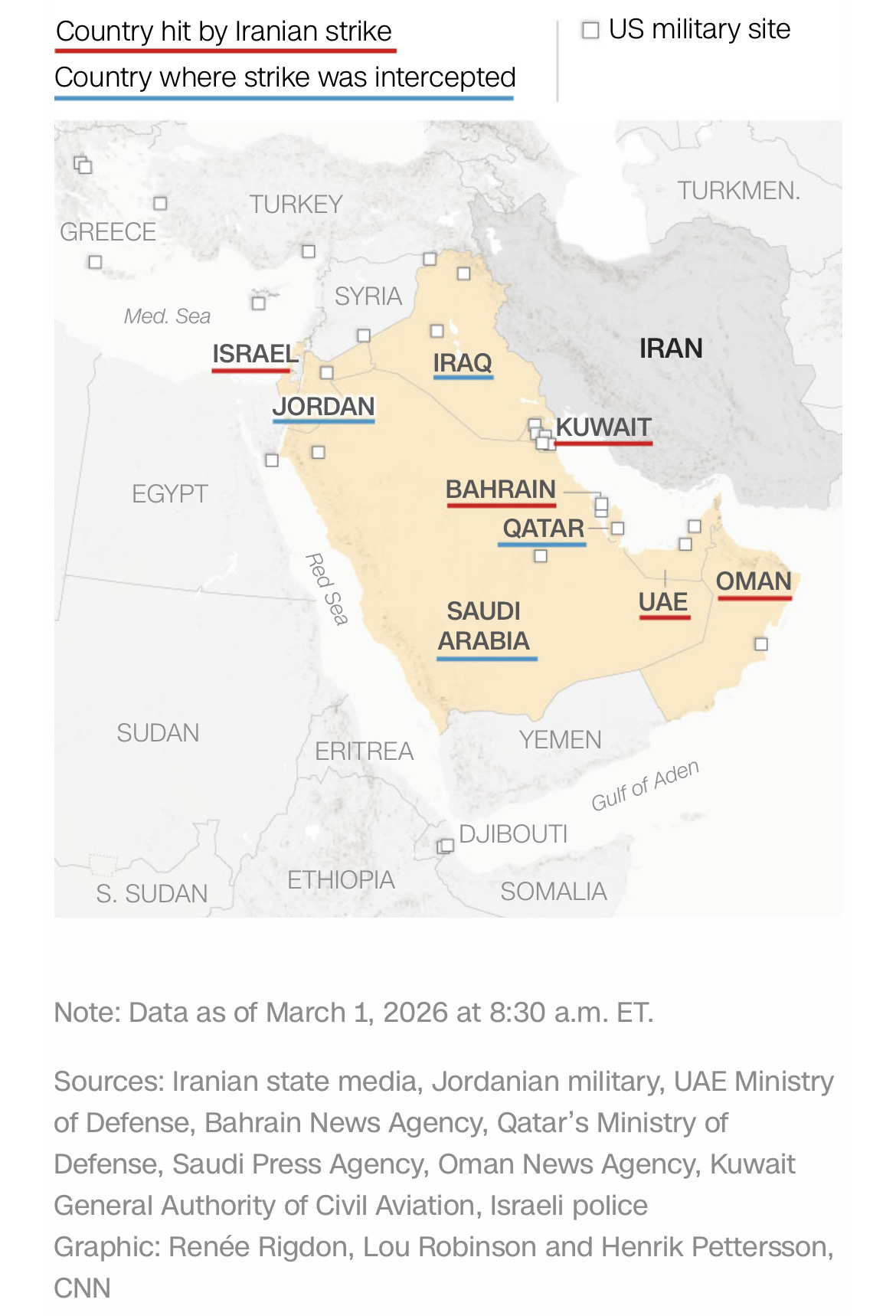
In an interview on ABC’s This Week, Iranian Foreign Minister Abbas Araghchi said, “We have every legitimate right to defend ourselves.”
View it here:
On Saturday, the U.S. and Iranian ambassadors to the United Nations clashed at an emergency meeting of the U.N. Security Council.
View it here:
The dramatic breakout of war comes after months of indirect nuclear talks between the U.S. and Iran, with Trump saying “bad things” would happen if Tehran did not agree to limit its nuclear program. In the run-up to the conflict, Trump had deployed what he called an “armada” of aircraft and warships to the Middle East. The military buildup was the largest since the U.S. invasion of Iraq in 2003 and came just after a major protest movement rocked the country.
The last round of talks concluded on Friday in Geneva, with both sides citing progress but no agreement.
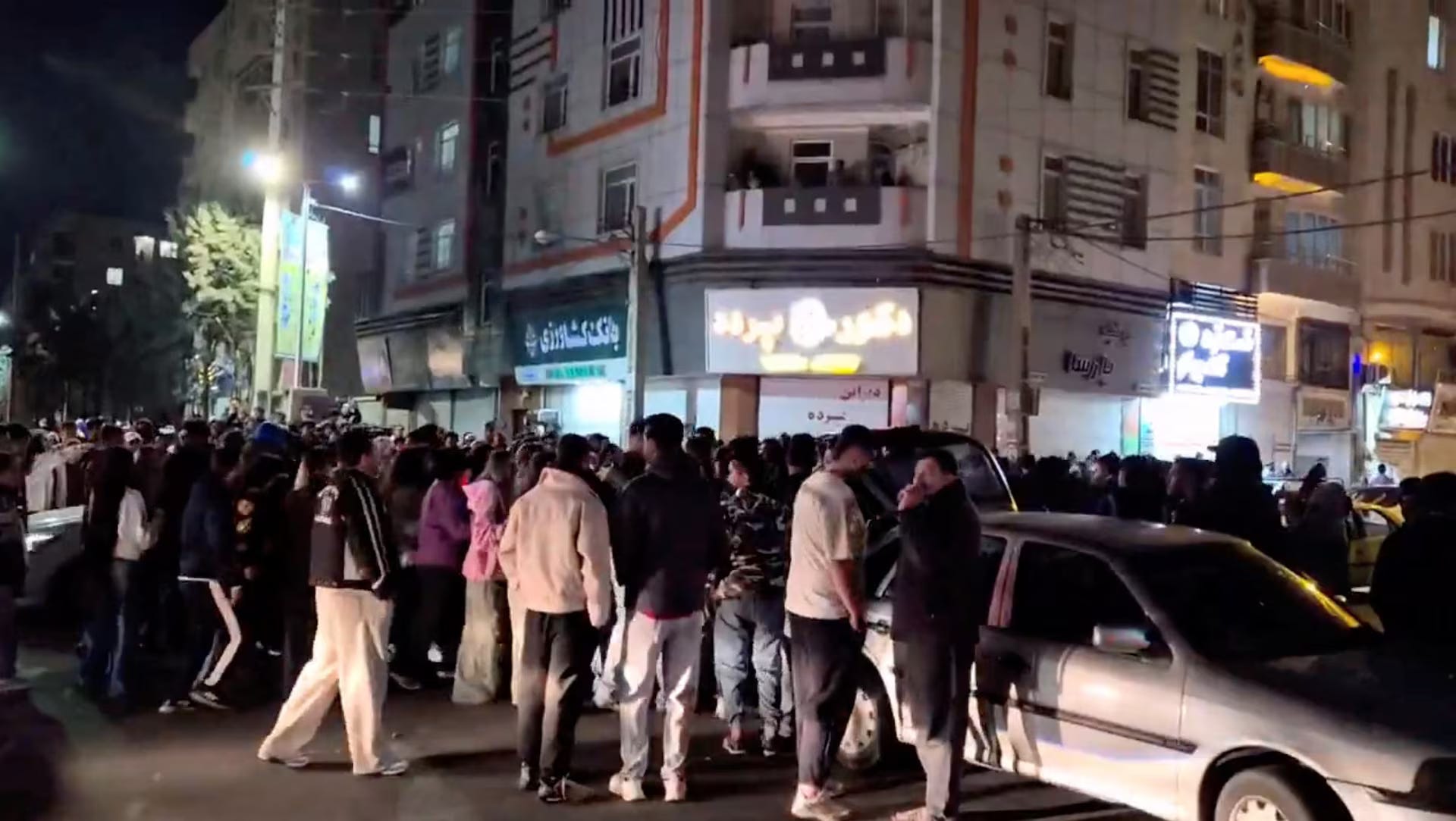
The news of Khamenei’s death led some Iranians to celebrate, while others mourned.
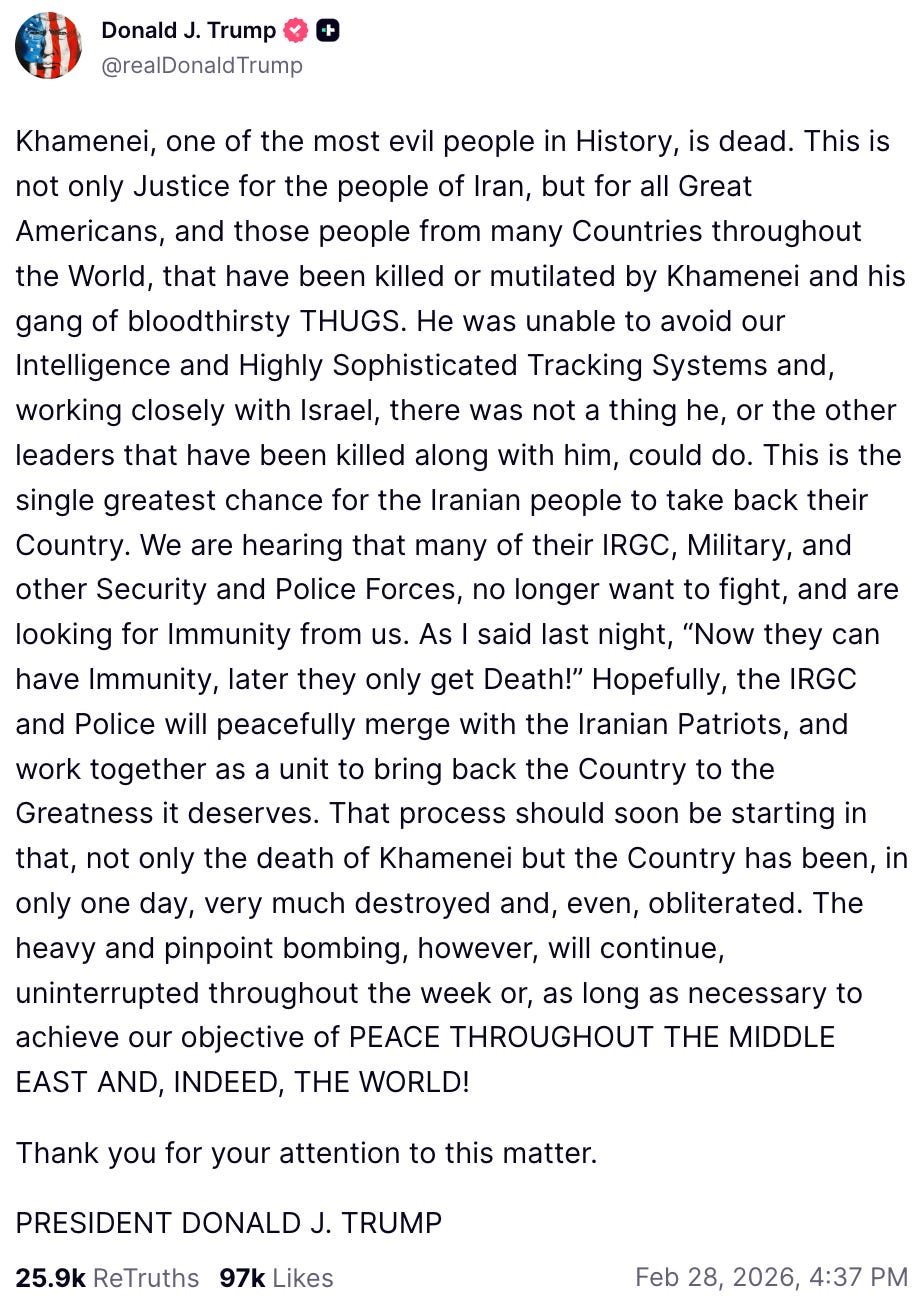
Confirming reports of Khamenei’s death on Saturday, Trump said that strikes on Iran would continue “uninterrupted throughout the week or, as long as necessary to achieve our objective.” He later said in an interview with The Daily Mail that the operation could “take four weeks or less.”
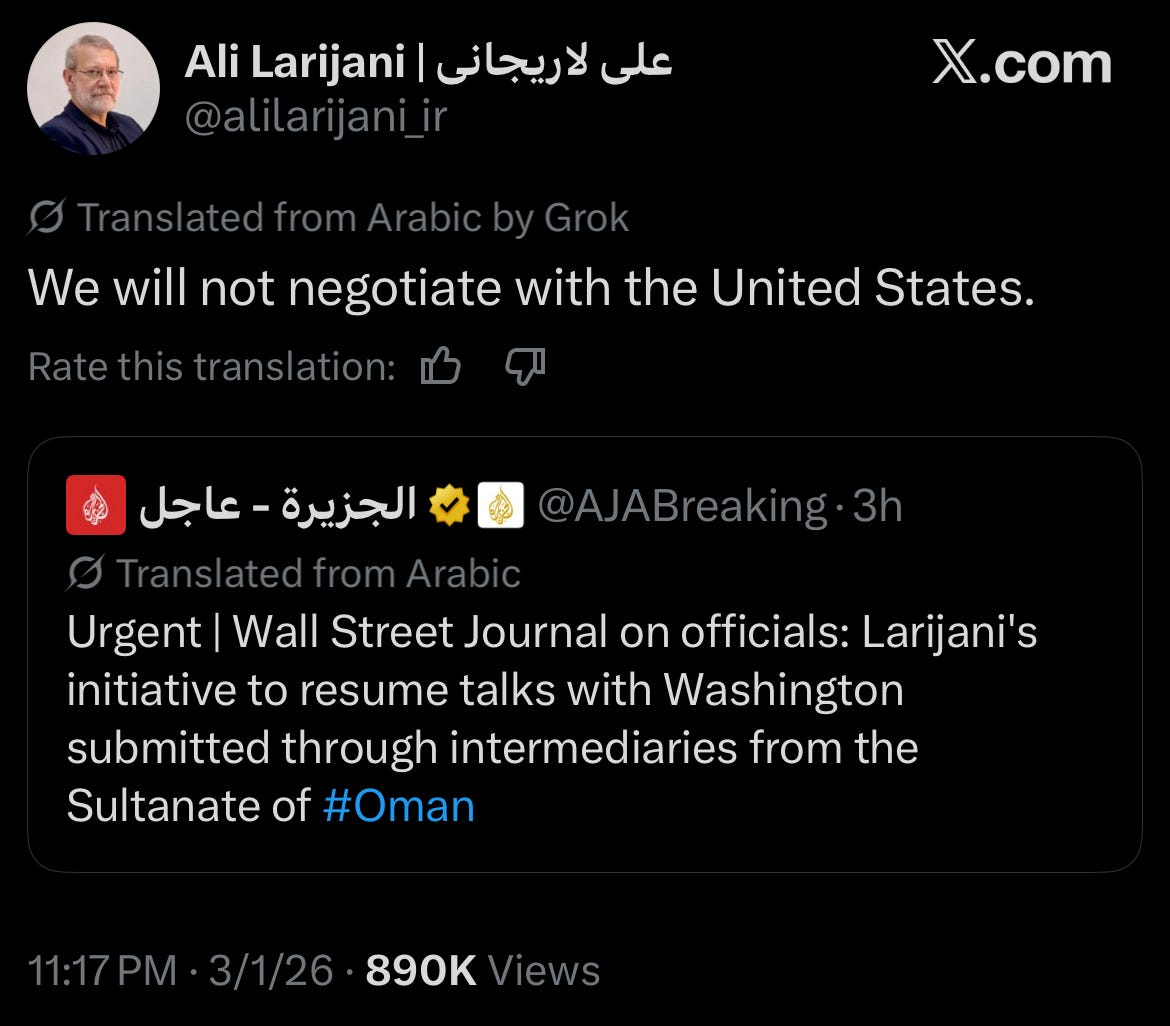
Last night, Ali Larijani, Iran’s top national security official, said his country would not negotiate with Washington after Trump said Tehran had agreed to talks.
U.S. Central Command said that three U.S. soldiers had died and five had been seriously injured since hostilities began.
In his second remarks since the beginning of the military campaign, Trump said yesterday that “there will likely be more” U.S. service members killed in the conflict.
View it here:
Israel called up 100,000 reservists for what the military said was to bolster its air defense, an apparent move meant to deter Hezbollah, a Lebanon-based terrorist organization backed by Iran.
Last week, the group warned that the killing of Khamenei would lead to the end of a fragile ceasefire deal it struck with Israel last year.
On Sunday, Israeli forces struck Beirut after rockets were fired at northern Israel from Lebanon.
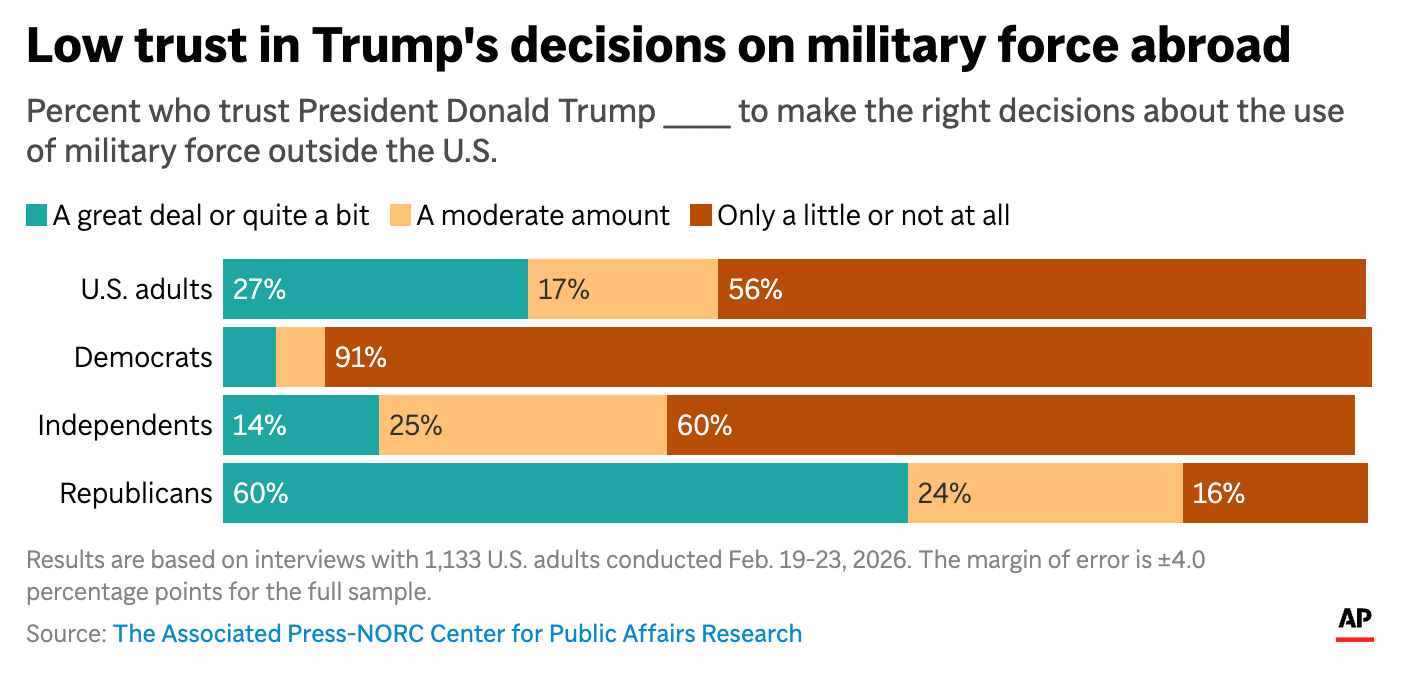
Just ahead of the conflict, Americans expressed low trust in Trump’s use of military force abroad, according to a new AP-NORC poll.
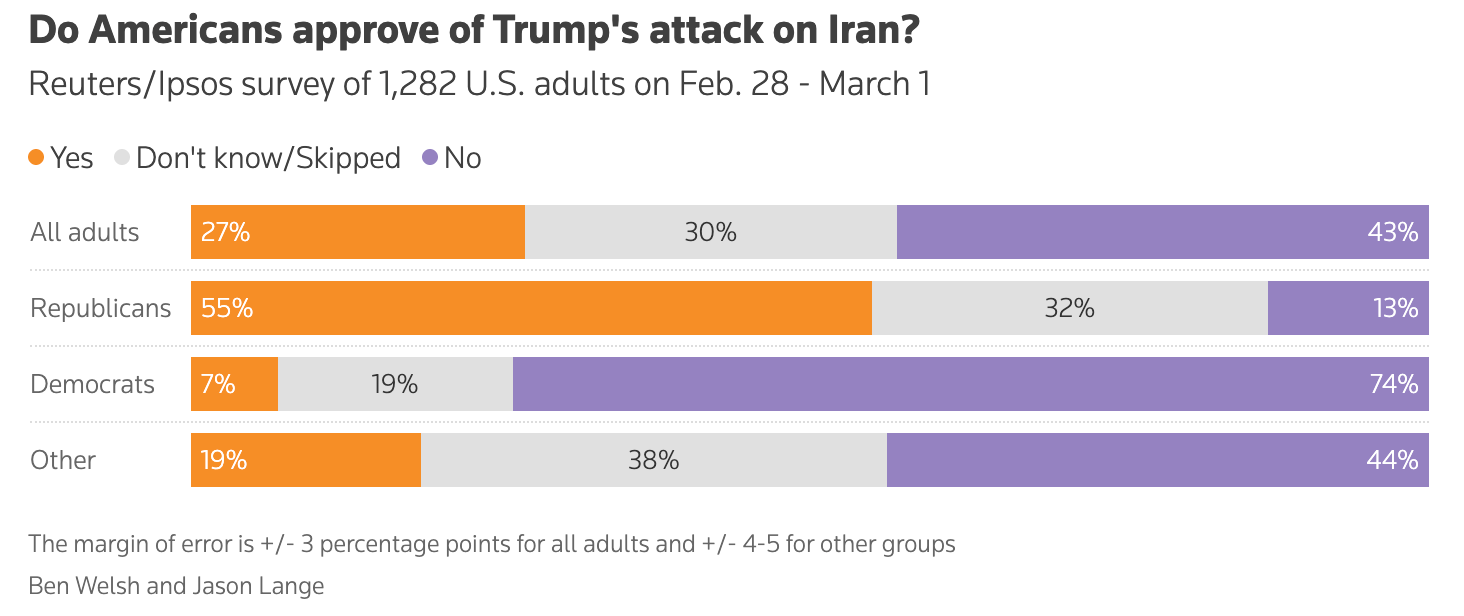
According to a Reuters/Ipsos poll published yesterday, only one in four Americans approve of the strikes that killed Khamenei.
In Congress, Republican lawmakers largely backed Trump’s actions, while Democrats called for an immediate vote on a war powers resolution to rein in Trump’s ability to authorize further strikes.
In an appearance on CBS’ Face the Nation yesterday, Connecticut Senator Chris Murphy scorned the administration, saying Trump “has no plan for the chaos.”
View the full interview here:
On NBC’s Meet the Press, South Carolina Senator Lindsay Graham, a longtime advocate of military action against Iran, praised the military operation.
View it here:
Global oil prices are expected to rise as Iran targets oil facilities and shipments through the Persian Gulf region, where approximately 20% of the world’s total oil consumption passes through the strategic Strait of Hormuz each day.
In June, Trump ordered strikes on three Iranian nuclear facilities in a bid to disable its nuclear program. Tehran insists the program is for peaceful purposes, which Washington and European capitals reject.
According to the International Atomic Energy Agency (IAEA), Iran now possesses a substantial stockpile of enriched uranium, the fissile material needed to build a nuclear bomb. The watchdog reports that Iran has over 400 kg of 60% enriched uranium, which is just a short step from 90% weapons-grade.
In his first term, Trump withdrew the United States from a nuclear agreement with the country—formally known as the Joint Comprehensive Plan of Action (JCPOA).
Trump criticized the agreement, saying it did not do enough to curtail Tehran’s development of ballistic missiles or its support for terrorist groups in the Middle East. He also argued the deal was ineffective because its restrictions on nuclear development were set to expire.
The pact, struck by his predecessor, Barack Obama, placed curbs on Tehran’s then-nascent nuclear program. The Biden administration sought to bring Iran back into compliance with the terms of the deal, but was unsuccessful.
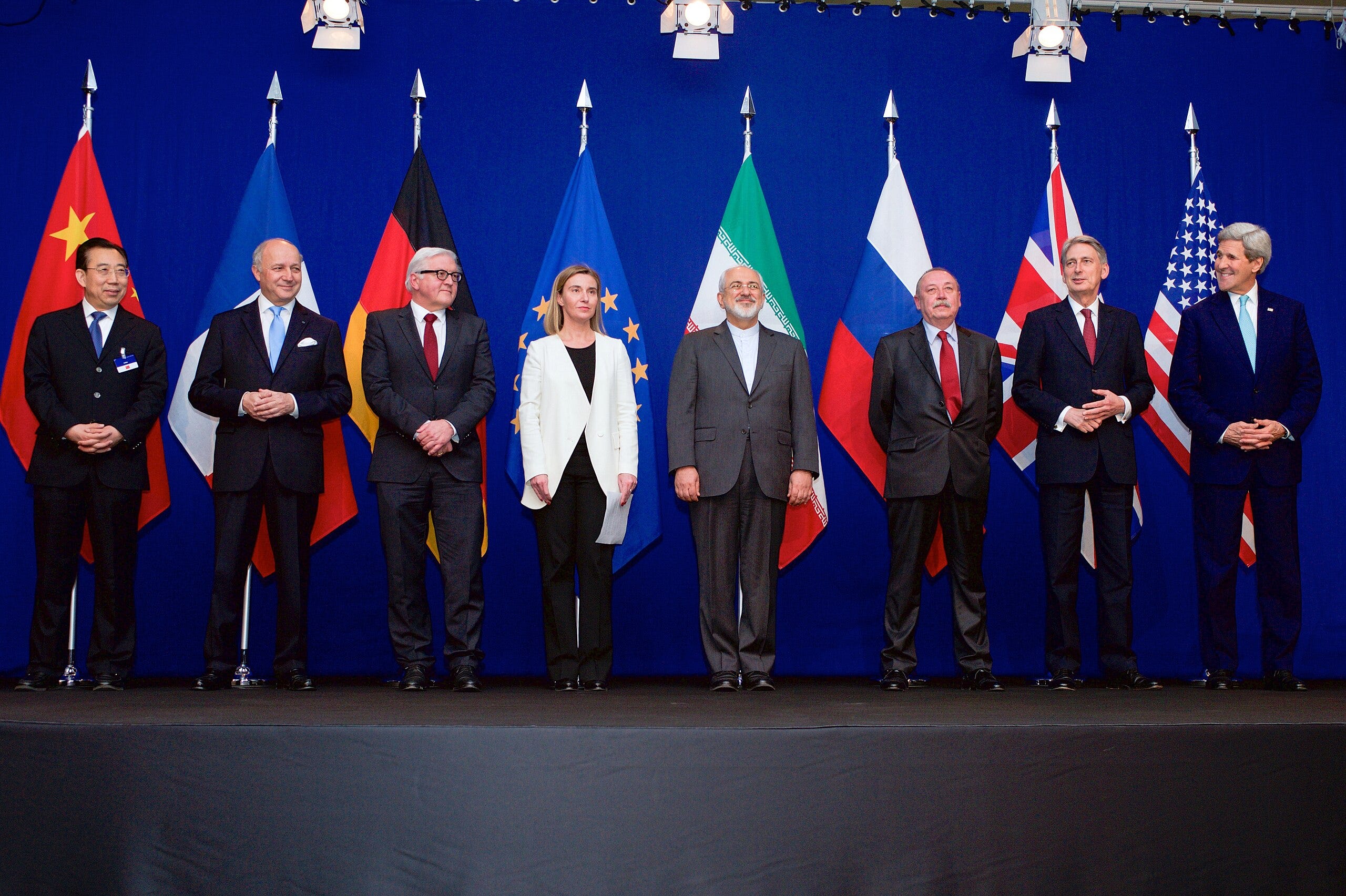
In July 2015, President Obama announced the agreement in an address at the White House, where he laid out what he viewed as the pact’s benefits.
View his remarks here:
Khamenei assumed the position of supreme leader in 1989, following the death of the Islamic Republic's founder, Ayatollah Ruhollah Khomeini.
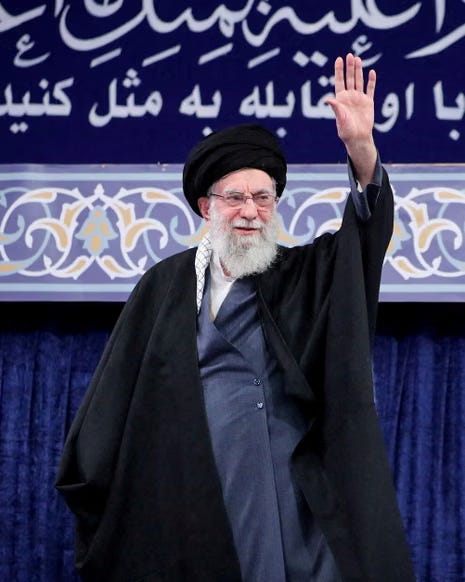
With the death of Khamenei, who exercised complete control over the country, it is unclear who will succeed him.
A chart from the Council on Foreign Relations breaks down Iran’s leadership hierarchy:
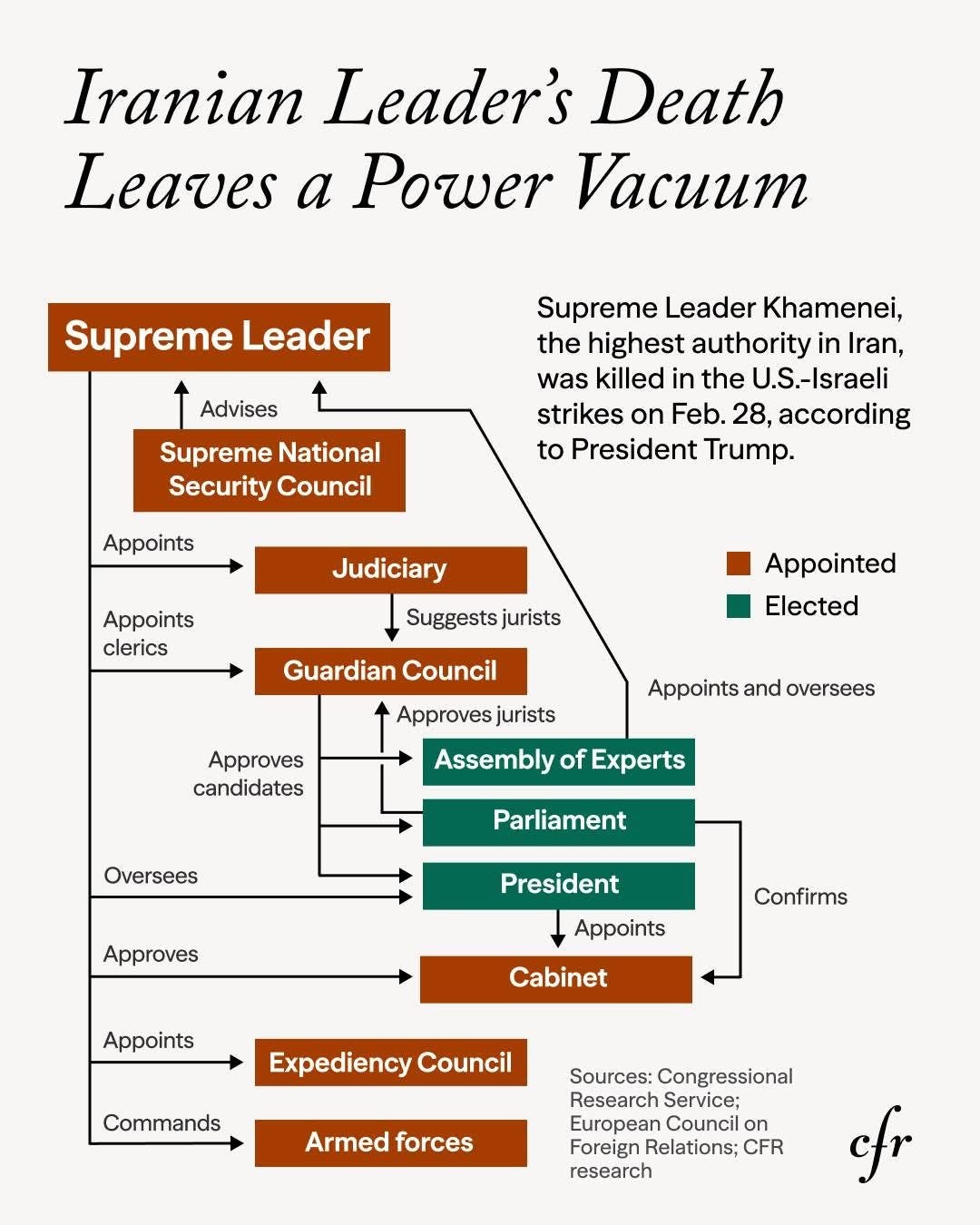
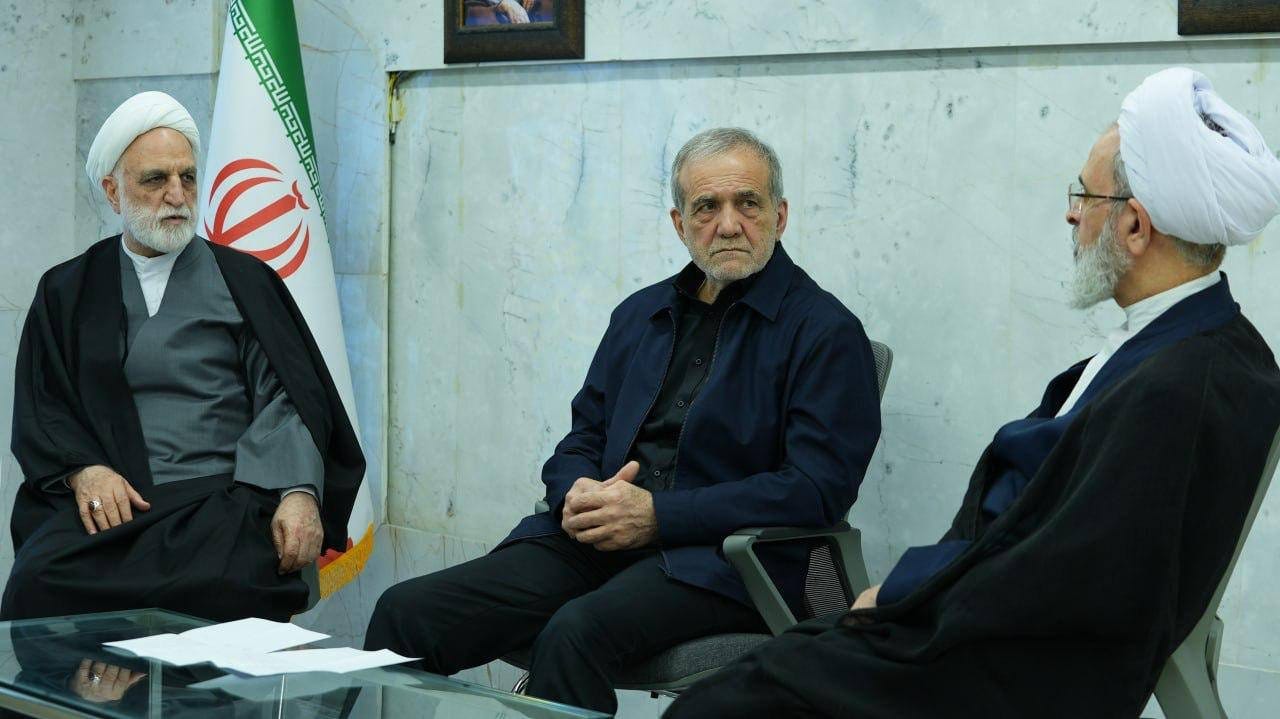
Yesterday, Iran’s Interim Leadership Council met for a second time, with the body saying a new supreme leader could be selected within days.
The board is composed of President Masoud Pezeshkian, judiciary chief Gholam-Hossein Mohseni-Ejei, and Alireza Arafi, a senior cleric representing the Guardian Council.
In 1979, Iranian revolutionaries and Islamic clerics seized power in Tehran after Mohammad Reza Pahlavi, the Shah of Iran, fled amidst widespread calls for his ouster.
Pahlavi, a staunch ally to the United States and Israel, was known for his aggressive modernization efforts and heavy-handed rule.
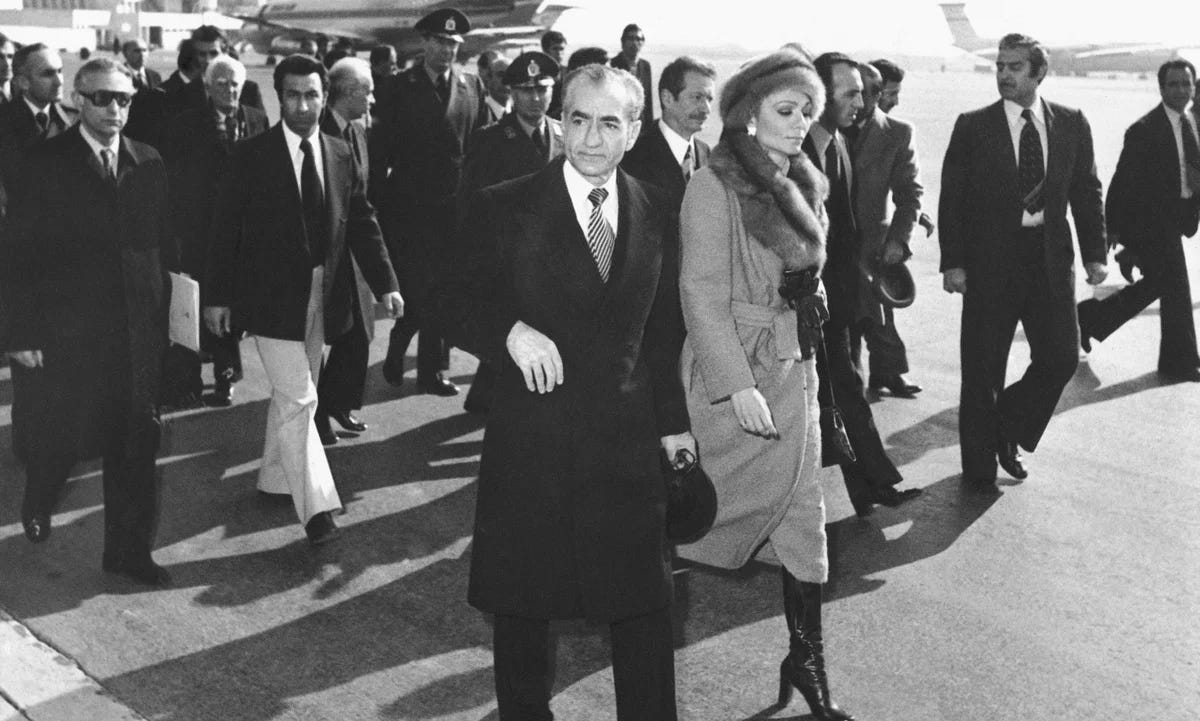
Pahlavi first assumed power in 1941, following the abdication of his father, Reza Shah Pahlavi. After briefly fleeing the country amid a power struggle with Prime Minister Mohammad Mosaddegh in 1953, the United States and Britain orchestrated a coup that restored him to the throne.
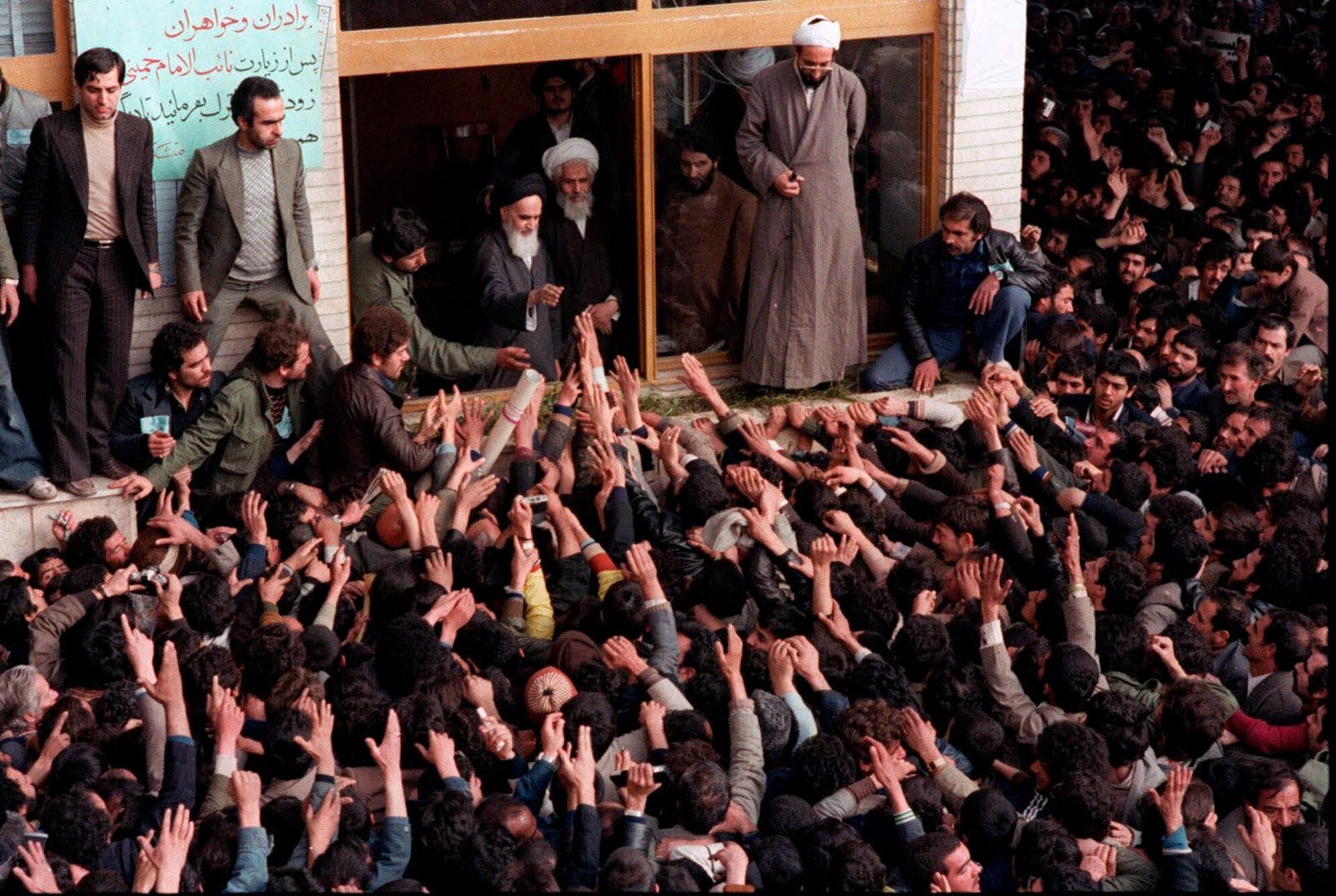
Two weeks after the Shah’s exit in 1979, Ayatollah Ruhollah Khomeini returned to Iran following 15 years of exile in France, where he quickly assumed control over the country’s military and institutions.
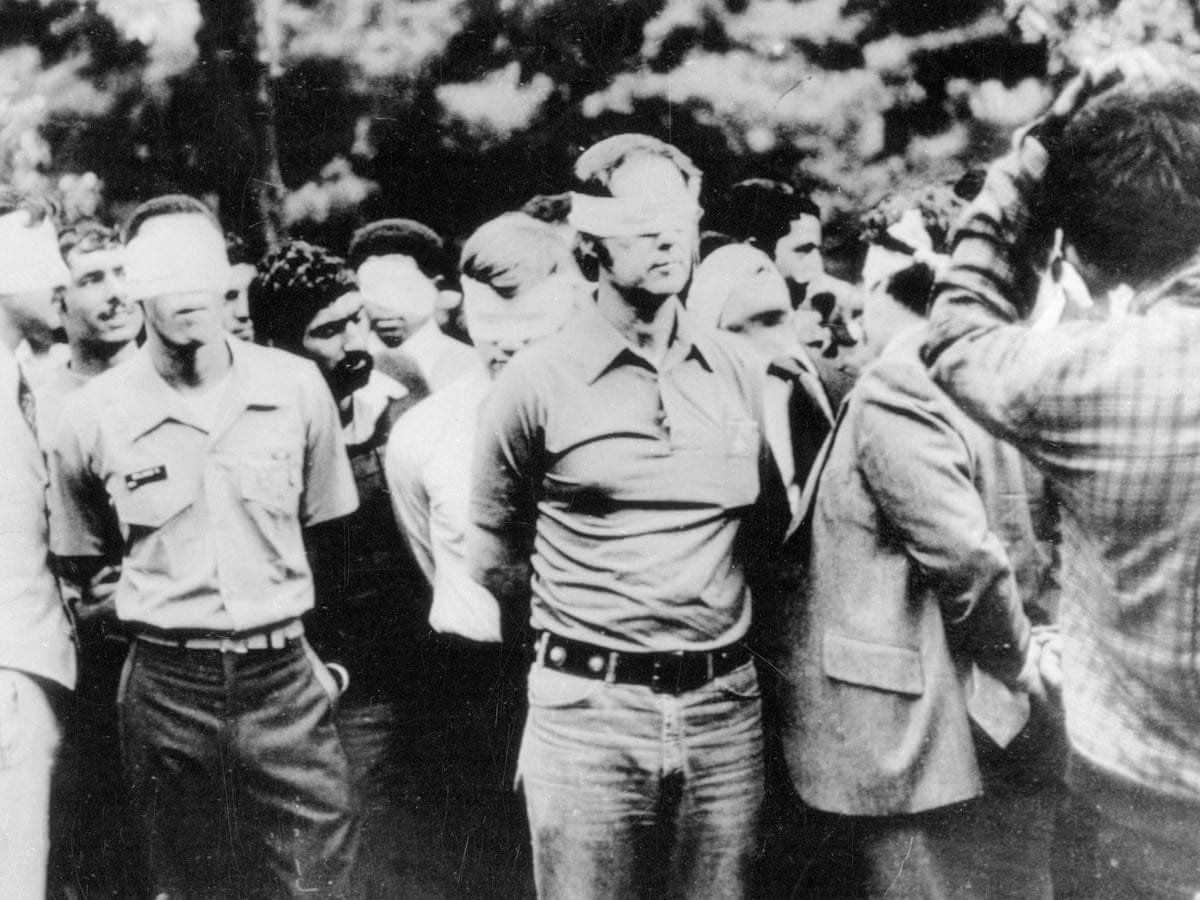
Later that year, in November, students supportive of the new theocratic government stormed the U.S. Embassy in Tehran, taking 52 American hostages, where they would remain in captivity for 444 days.
Relations between Washington and Tehran would remain hostile in the years that followed, with Iran supporting militant groups in the region responsible for deadly attacks on Americans.
For decades, the Iranian government has led and endorsed "Death to America" and "Death to Israel" chants.
Last night, Reza Pahlavi, a leader of the Iranian opposition and the son of the late deposed shah, sat for an interview with CBS’ 60 Minutes, where he said he was ready to return to the country to lead an interim government.
View the interview here:
Other Links:
Suspect in Texas shooting wore ‘Property of Allah’ clothing and Iranian flag emblem, AP source says - AP
Trump Stays Out of Public View After U.S. Launches Military Assault on Iran - The New York Times
Harris opposed to ‘regime change’ war in Iran - The Hill
US Senate candidates in Texas make final pitches to voters ahead of Tuesday’s primary - AP
Texas Senate primary barrels to finish amid $122 million ad barrage, Trump’s shadow - The Dallas Morning News
Kamala Harris endorses Jasmine Crockett in Texas Democratic Senate primary - ABC
Cornyn, Paxton, Hunt battle for Texas GOP senate nominee - Texas Tribune
Bannon blasts Trump campaign aides in Texas Senate showdown - Politico
At least 55 Ghanaians killed in Russia-Ukraine war, minister says - BBC
Kenyan lawmaker among 6 dead in helicopter crash - Africa News
President Donald Trump floats ‘friendly takeover’ of Cuba - ABC
Trump Gives Green Light to Private Oil Sales to Cuba - The New York Times
Argentina passes Milei’s controversial labor reform - DW
Afghanistan fires at Pakistani jets over Kabul as conflict intensifies - NBC
At least 22 people killed in Pakistan as protesters try to storm US Consulate - AP
Russia condemns US-Israel strikes on Iran as ‘unprovoked act of armed aggression’ - AP
Kyiv says Russia accepted US plan for Ukraine security guarantees - Reuters
Russia Weighs Halt to Peace Talks Unless Ukraine Cedes Territory - Bloomberg
Russia and Ukraine agree local truce to allow repairs at Europe’s largest nuclear power plant - CNBC
World leaders react cautiously to US and Israeli strikes, death of Iran Ali Khamenei - AP
Iran school strike claims over 100 dead; US and Israel have not confirmed - France 24
Hundreds of thousands of travelers stranded by flight disruptions after attack on Iran - AP
That’s all for today. See you tomorrow.
Notes:
https://scowcroft.substack.com/p/tsg-weekly-calendar-march-2-march
Good Morning ☕ Here's to another Week of Insanity, Jacob, Thanks for all you do each week, and will reStack ASAP 🙏
"The United States was at peace with that Nation and, at the solicitation of Japan, was still in conversation with its Government and its Emperor looking toward the maintenance of peace in the Pacific. Indeed, one hour after Japanese air squadrons had commenced bombing in the American Island of Oahu, the Japanese Ambassador to the United States and his colleague delivered to our Secretary of State a formal reply to a recent American message. And while this reply stated that it seemed useless to continue the existing diplomatic negotiations, it contained no threat or hint of war or of armed attack."
--President F.D. Roosevelt, 08dec41.